
 DE
 EN
 IT
 SL
 HU
 SK
 CS
2 loading lifting tables with 6 tons: from planning to maintenance
Two load-lifting tables for transporting goods between two floors
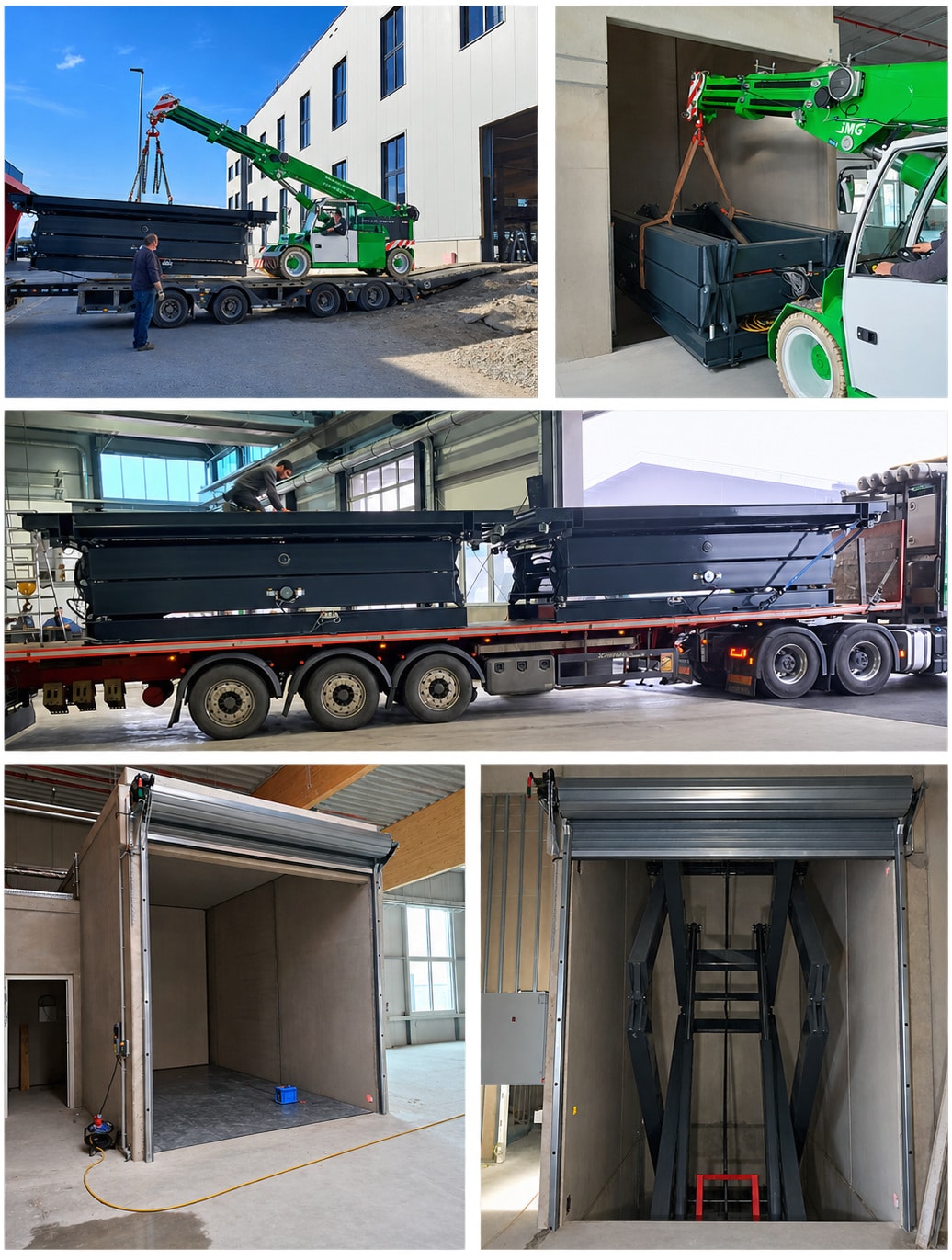
When heavy and bulky goods have to be transported between two floors, an ordinary lift often isn’t enough. Especially not when a large platform, several tons of lifting capacity, and as simple loading and unloading as possible are required.
Specifically for this task, we were tasked with constructing two hydraulic load-lifting tables with a lifting capacity of 6,000 kg each. The client was the renowned general contractor. GOLDBECK RHOMBERG, which operates the facilities for the well-known logistics service provider Lagermax needed.
The requirements were clear: Large goods should be able to be reliably transported between the ground floor and the upper floor. For this purpose, two lifting tables with a platform size of 5,850 × 3,300 mm each and a vertical double scissor were provided.
Our task went far beyond just delivering the lifting tables.
Already during the planning phase, we prepared the required shaft plans, according to which the structural preparations were carried out. Subsequently, we took over the production, delivery, complete assembly and commissioning of the systems – including roller doors, light barriers and control technology.
The processing of the required acceptance according to the applicable lifting equipment regulations and the detailed training were also part of our scope of services. We also carry out ongoing maintenance.
For the customer, this means: a single contact person for all lifting technology, from the initial planning to ongoing operation.
From shaft planning to ongoing maintenance
Especially for large lifting systems, it is important that the planning of the lifting technology and the structural design match each other.
That is why we already prepare the necessary shaft plans in advance. These take into account the structural requirements for the subsequent installation of the lifting tables.
After production, we take care of delivery, assembly, and commissioning. The required acceptance is handled in accordance with the applicable lifting equipment regulations.
And also After the handover, we remain the contact person. The regular maintenance We also take over the two load-lifting tables.
load
6000 kg
Platform
5,850 x 3,300 mm
Hub
6600 mm
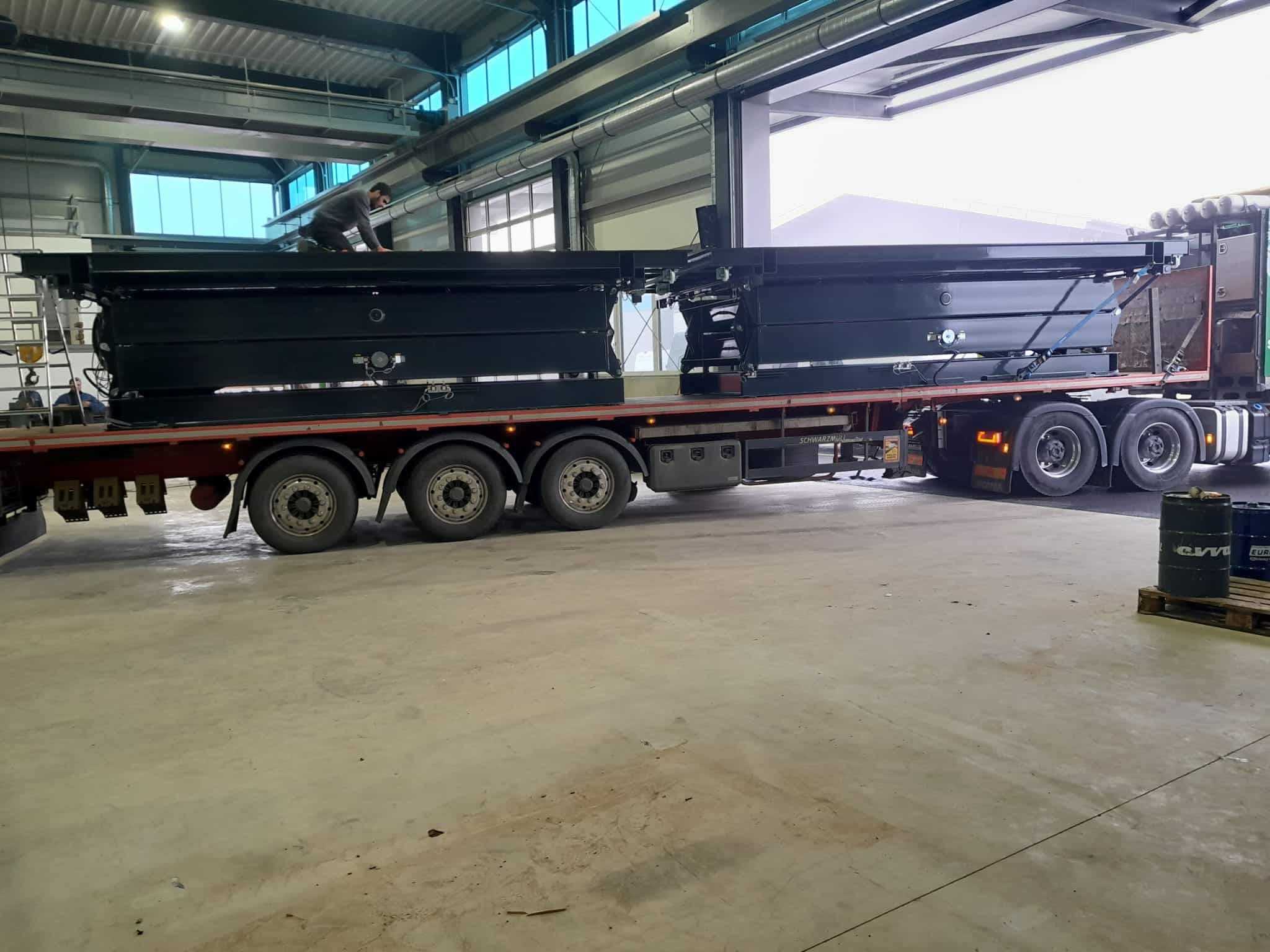
Delivery of the two heavy-duty lifting tables
Even during transport it is clear that these are not ordinary lifting tables. Both systems were assembled for delivery and transported on a flatbed trailer.
Due to the dimensions and weight, the installation in the building also had to be prepared accordingly.

A special mobile crane was used for the unloading. This allowed the heavy structures to be lifted off the truck and positioned for further transport.
The challenge with such projects lies not only in the weight. The access routes, existing opening points for doors and the space conditions in the building must also be taken into account. Therefore, we adjust the delivery and installation to the structural conditions already during the project planning phase.
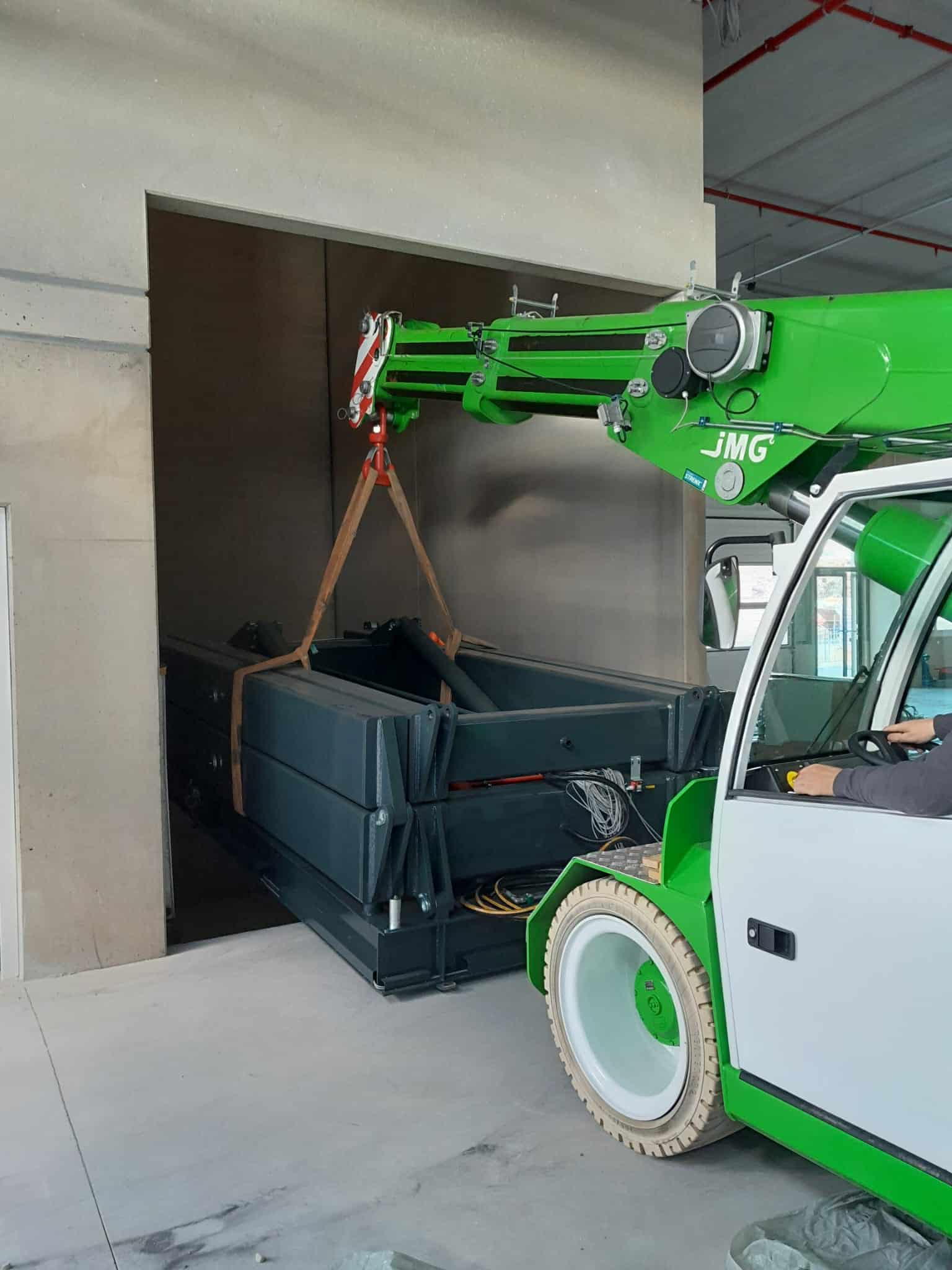
Mounting in the shaft – first the saw, then the platform
For this assembly, we had to take a slightly different approach than with an ordinary scissor lift table.
Due to its dimensions, the entire installation could not easily fit into the planned shaft. Therefore, the platform for assembly was dismantled.
First, we lifted the base frame, including the vertical double scissor lift, into the prepared pit using the special lifting equipment. Only then was the large lifting table platform inserted separately, precisely positioned, and bolted to the scissor lift structure.
This approach made the deployment of the massive installations even feasible at all.
The two lifting tables operate with double scissors arranged vertically. Two scissor stages are located one above the other, allowing for large lifting heights without requiring a correspondingly long platform.
Hydraulic plunger cylinders are used for the lifting motion. The hydraulic unit is externally mounted and is driven by an electric motor with a power of approximately 11 kW.
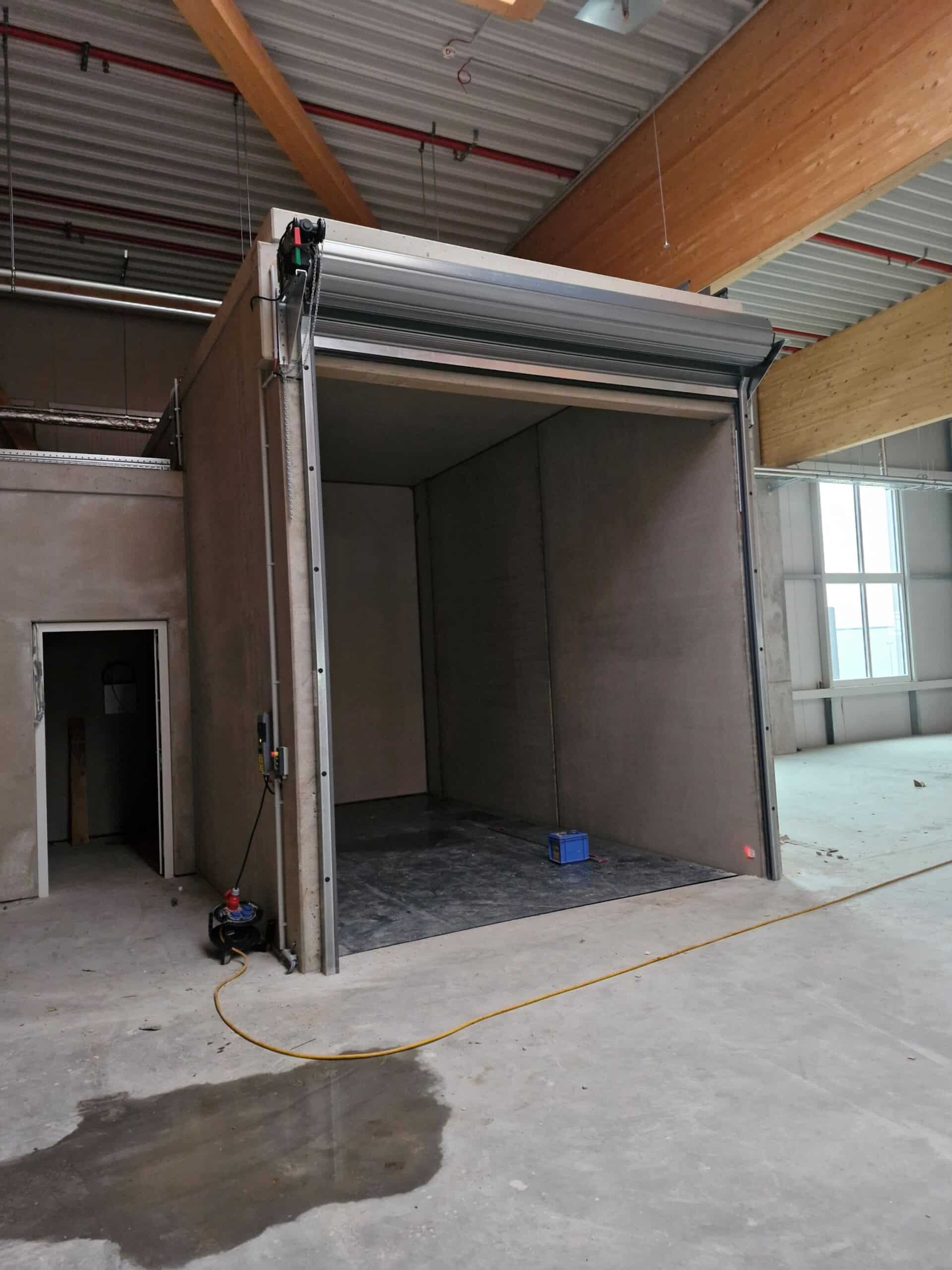
Upper stop with roller door and bolt locking
An important component of this system is the protection of the two stops.
For that we have Two roller doors supplied and installed for the loading lift table, One on the ground floor and one on the first floor. In total, four roller doors were integrated into the project.
The gates secure the access to the shaft and at the same time allow for a generous opening for loading and unloading.
In addition, the door openings have been equipped with light barriers. These monitor the access area and are part of the safety concept of the lifting equipment.
Another special feature is the Bolt locking at the upper holding point. It allows for mechanical support of the platform in the intended upper position.
The elevator control system was designed in accordance with the requirements of EN 81-31. The lift tables are operated by staff on the ground and upper floors, each with an emergency stop function.
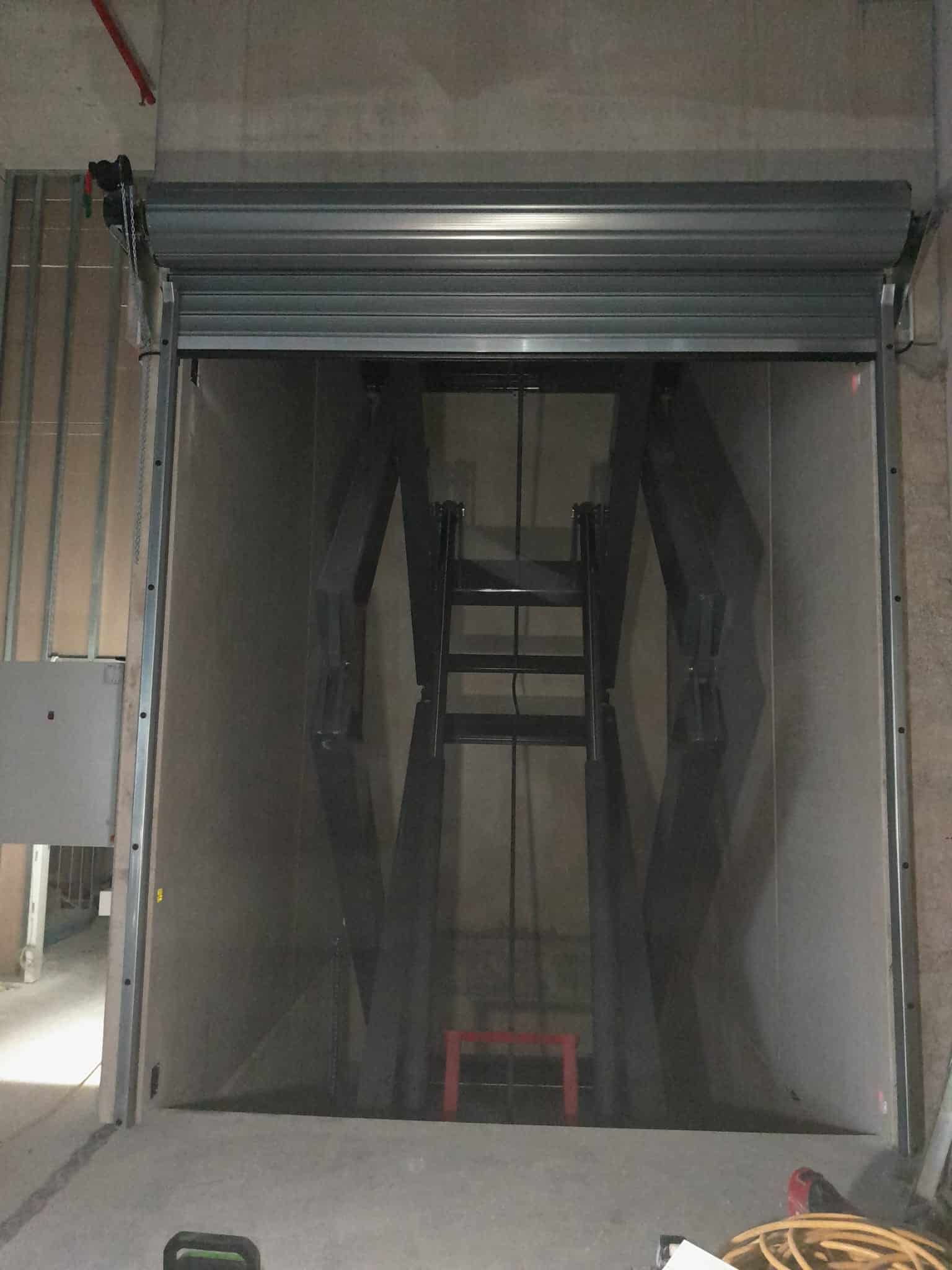
Lower stop – a look at the double-edged scissors
From the lower stop, the construction can be particularly well seen.
The two scissor stages arranged one above the other form the heart of the lifting table. They enable the vertical transport of the heavy loads within the shaft prepared on-site.
In the lowered position, the massive shearing structure is located under the platform. During travel, the double shear unfolds and lifts the load to the desired level.
For safety and reliable operation, maintenance supports, an overpressure valve, and a lowering brake valve are provided, the latter of which allows the lowering speed to be adjusted.
A complete load-lifting table does not consist solely of a scissor lift and a platform. It is only through the interplay of hydraulics, control systems, access security and mechanical safety devices that a lifting system for daily use in warehouse and logistics operations can be created.
Do you need a load-lifting table for several floors?
Whether 1,000 kg, 6,000 kg or significantly higher load capacities: We plan and supply hydraulic load-lifting tables that are suitable for the structural conditions and the requirements of your operation.
Upon request, we also undertake shaft planning, installation, commissioning, the handling of acceptance, and subsequent maintenance.
Feel free to call us anytime for advice!
Ing. Lukas Hornbogner, lifting table expert: +43 650 58 11 056 or by email: lukas@maluk.at
FAQ Last holding table
Frequently asked questions about the lift table between two floors
Yes, for pure freight transport, a hydraulic load-lifting table can be a suitable alternative to a traditional forklift. This solution is particularly interesting for large platform dimensions and high load capacities.
A vertical double scissor allows for greater conveying heights with a comparatively compact platform length. Which solution is suitable in a specific case depends on the conveying height, space requirements, use, and applicable safety requirements.
In a vertical double scissor lift, two scissor stages are located one above the other. This allows the lift table to reach significantly higher heights than a comparable single scissor lift with a similar platform length.
This construction method is particularly suitable for transporting goods between different building levels. However, the assembled structure requires more structural height, which is why the shaft must be planned accordingly.
The required security equipment depends on the specific facility and its use. Among other things, this project included monitored roller shutters, light barriers at the door openings, emergency stop devices, as well as hydraulic and mechanical security equipment.
In addition, the system features a bolt lock at the upper holding point. The exact configuration must always be determined in the context of the risk assessment and in accordance with applicable regulations.
In addition to the shaft dimensions, the weight of the individual components, access options, and available mounting areas are particularly crucial.
In the case of large installations, it may be necessary to install the platform separately from the base frame and the scissor construction. Therefore, early coordination between the construction company and the lift table supplier is particularly important.
Yes, hydraulic lifting systems must be inspected and maintained in accordance with applicable regulations. The specific inspection and maintenance requirements depend on the type of system and the legal framework in place at the site of use.
Maintenance includes, for example, the control of the hydraulics, the shearing structure, the control system and the safety devices. In this project, maluk also undertakes the ongoing maintenance of the two systems.